
Stone sealer concentrate.
A water-based silane concentrate that you dilute on site. It penetrates mineral substrates, makes them water repellent and leaves them breathable. One kilogram gives up to 40 kilograms of ready-to-use solution.
- Up to 40 kg from 1 kg
- Breathable
- Water-based, solvent-free
- Not dangerous goods
At a glance
- Product
- NANO4YOU Stone Impregnation Concentrate, art. 70107
- What it is
- Water-based silane concentrate. Diluted with water it becomes a penetrating, breathable water repellent for mineral substrates.
- Dilution
- 1:4 to 1:39 with water, standard range 1:9 to 1:19
- Yield
- 1 kg of concentrate gives 5 to 40 kg of ready-to-use solution
- Application rate
- 50 to 250 ml of diluted solution per m², depending on absorbency
- Drying
- Effective after about 3 hours at 20 °C, fully cured after 12 to 24 hours
- Pack sizes
- 1 kg, 5 kg, 10 kg, 25 kg, 200 kg drum, IBC on request
- Classification
- Not classified as hazardous under CLP, not dangerous goods for transport, not a biocidal product, WGK 1
The concentrate behind our stone and concrete sealers.
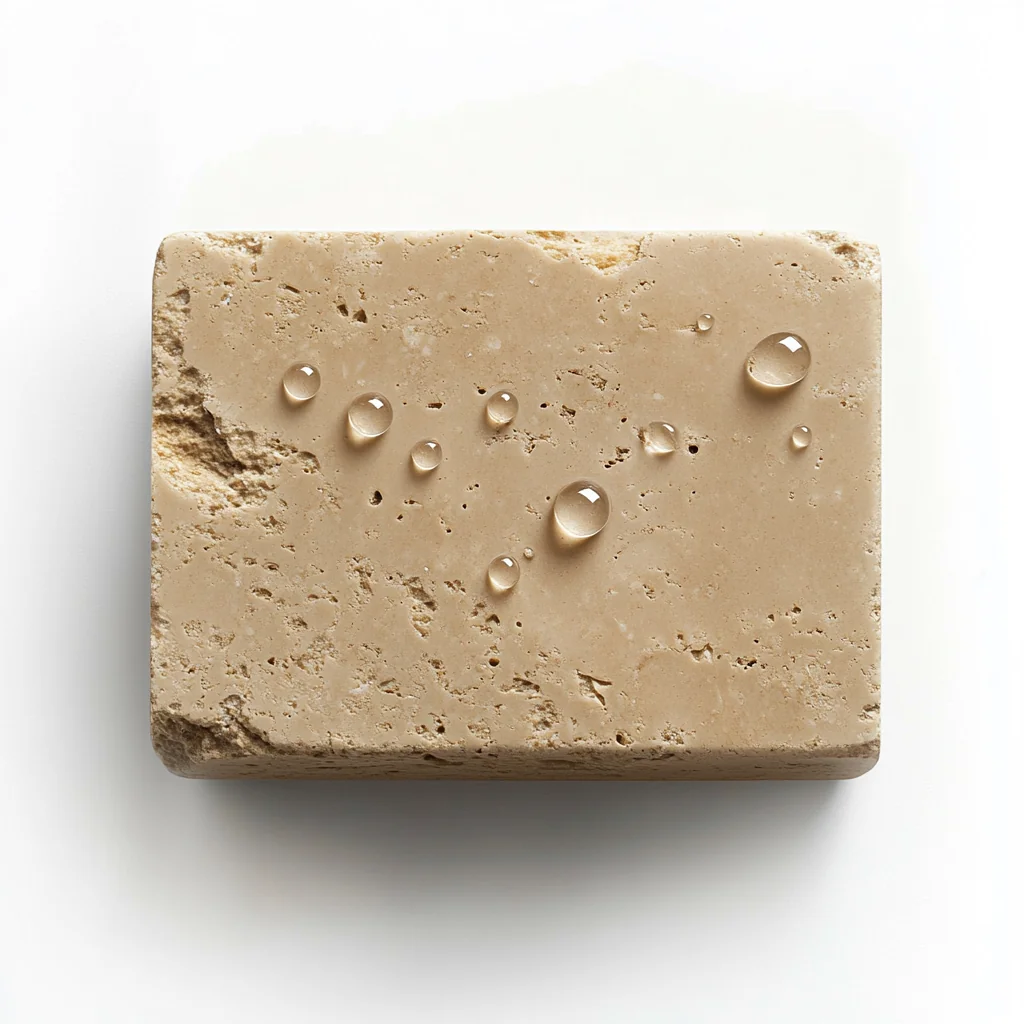
The concentrate is the high-strength version of our ready-to-use stone impregnation. It penetrates open-pore mineral substrates and makes them water repellent almost invisibly. The substrate stays vapor-permeable and keeps drying out from the inside.
Contractors and private label partners use it to adjust the strength to each substrate and to cut storage and freight volume. The same concentrate is also supplied under the name Penetrating Concrete Sealer Concentrate for concrete driveways and courtyards.
Suitable substrates are exposed and industrial concrete, concrete pavers, natural stone such as sandstone, limestone and granite, clinker and other brick, render, screed and exposed masonry. Glass, glazed tiles and surfaces already sealed with a film-forming coating do not absorb it.
Recommended dilution by substrate.
Practical values, one part concentrate to X parts water. Confirm the dilution on a sample area for larger projects.
| Substrate | Dilution |
|---|---|
| Render facade, lime or mineral render | 1:14 to 1:19 |
| Render facade, sand and cement render | 1:19 to 1:29 |
| Dense render, synthetic resin render, painted surfaces | 1:29 to 1:39 |
| Exposed concrete, new to moderately weathered | 1:19 |
| Exposed concrete, heavily weathered and very absorbent | 1:9 to 1:14 |
| Clinker brick, brick, brick slips | 1:14 to 1:19 |
| Concrete pavers and courtyards, concrete driveways | 1:14 to 1:19 |
| Sandstone, limestone | 1:9 to 1:14 |
| Granite, basalt, split or bush-hammered | 1:19 to 1:29 |
| Granite, marble, ground or polished | 1:29 to 1:39 |
| Clay roof tiles | 1:14 to 1:19 |
| Industrial floors with high mechanical load | 1:4 to 1:9 |
| Refreshing an existing impregnation | 1:29 to 1:39 |
Shake the concentrate thoroughly before diluting and use demineralized or softened water if possible.
Conditions and neighboring surfaces.
The substrate must be dry, clean and sound. Remove algae, moss, efflorescence and old coatings first and let the surface dry out completely after wet cleaning. Freshly poured concrete needs at least 28 days to cure before treatment. Factory-made pavers can usually be treated straight away.
Work at air temperatures between 5 and 30 °C and surface temperatures between 5 and 25 °C, not in rain and not in direct sunlight. On sun-exposed facades the surface can be much warmer than the air.
Applying the diluted concentrate
- 01
Clean and dry
Remove dirt, growth and old coatings. Let the substrate dry completely.
- 02
Find the dilution
Choose the ratio from the table and confirm it on a sample area. Water drops should bead up once it has dried.
- 03
Apply generously
Spray with a low-pressure, airless or HVLP sprayer, or use brush and roller, until an even dark wet film forms that soaks in within minutes.
- 04
Second coat if needed
On very absorbent substrates apply a second coat after 24 hours. Consumption then drops by up to half.
- 05
Check the effect
After drying, water should bead up and roll off. Where a water film forms, treat that spot again.
Frequently asked questions
Does it leave a film or change the color of the stone?+
It penetrates the pores and forms no film on the surface. The substrate stays vapor-permeable. Always check the appearance on a sample area, as absorbency and color of mineral surfaces vary.
Can I use it on a concrete driveway against water, oil and stains?+
Yes, concrete driveways are a standard use at 1:14 to 1:19. The treatment slows down the uptake of water and dirt so that stains can be removed more easily. Fresh oil should still be removed promptly.
Can it be applied to painted or acrylic-coated exterior walls?+
Only if the surface still absorbs water. Dense or painted render is treated at 1:29 to 1:39. Surfaces that are sealed with a film-forming coating do not take it up. A sample area shows whether the wall absorbs the solution and whether anything changes visually.
How long does the protection last?+
It lasts as long as water still beads up. Weathering, abrasion and cleaning reduce it over time. Check with the water-drop test and refresh at 1:29 to 1:39 when water starts to soak in.
Is the concentrate dangerous goods for shipping?+
No. According to the safety data sheet it is not dangerous goods under ADR, RID, IMDG and IATA and is not classified as hazardous under CLP. It is water-based and solvent-free.
Can I produce my own facade product from it?+
Yes. Partners dilute and fill it under their own brand, see private label. We provide the safety data sheet and the technical data sheet.
Can I test it first?+
Yes. Samples are free of charge, only shipping is charged (EUR 12.90 for a small sample to EU countries, EUR 11.50 to Austria, other destinations on request).
Describe your substrate and volume.
Prices are quoted net ex works Bexbach, depending on quantity. Tell us the substrate, the area or annual volume and your country.